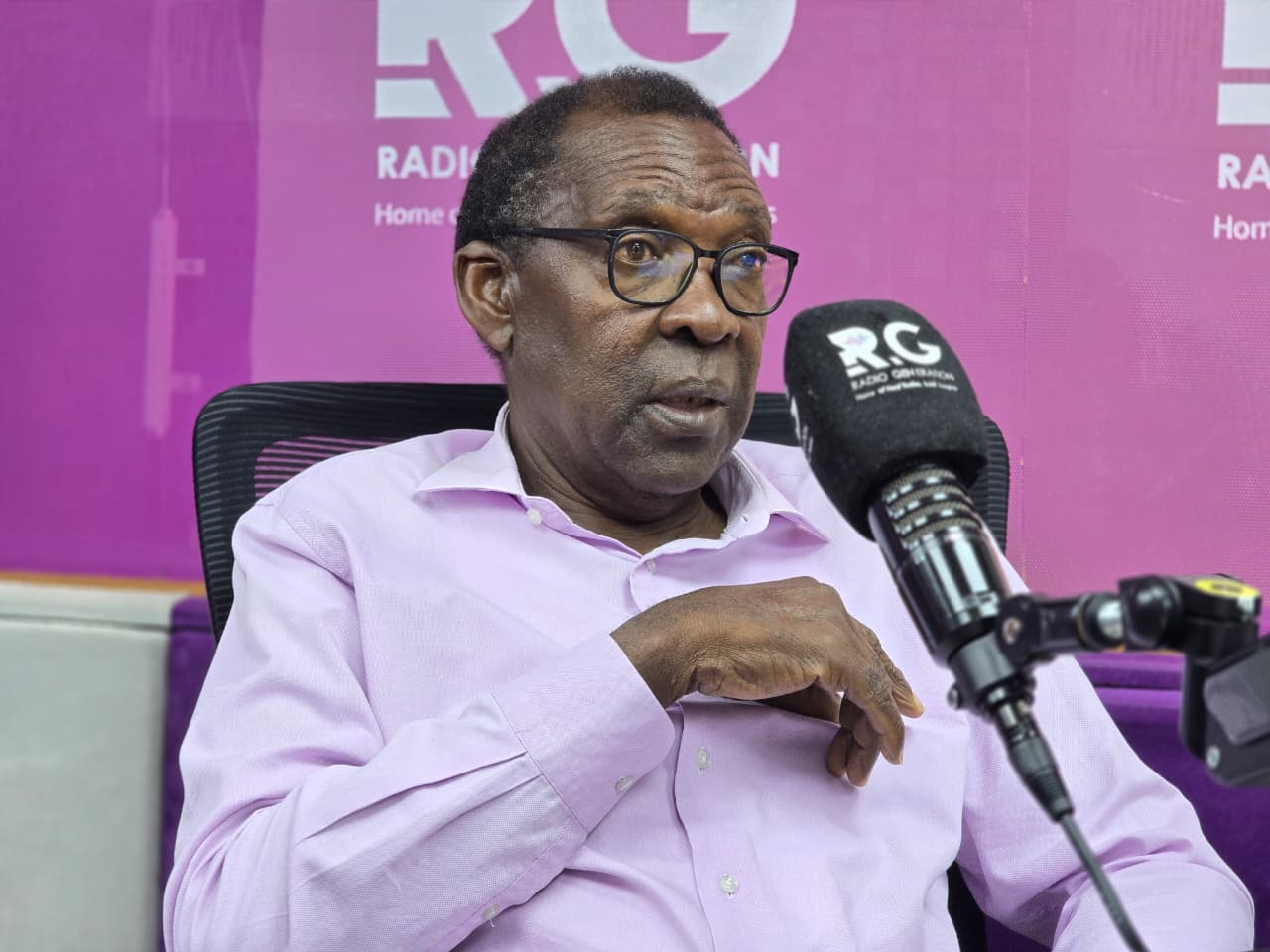
Political analyst Herman Manyora claims Kenya’s youthful majority is disengaged from voting and disillusioned with legacy parties, warning that unless ODM embraces youth-led, structured change, it risks irrelevance as new political movements redefine how power is contested and exercised.
Speaking on Tuesday during a Radio Generation interview, Manyora dismissed claims that internal debates signal the collapse of ODM, arguing instead that “ODM is just a party doing the sort of things parties do, which is politics.”
He added that disagreements and internal fights are not unusual, saying that such dynamics are normal and even expected.
However, he suggested that the repeated public interventions by ODM Secretary General Edwin Sifuna may point to deeper tensions within the party.
“It feels like he has to remind us,” Manyora said, questioning whether Sifuna was addressing the public or reminding someone who seems to be forgetting that he is the SG of the ODM party.
At the heart of the discussion was youth disengagement from electoral politics. Manyora pointed to figures indicating that about eight million Kenyans did not vote in the last election.
“If we look at the stats of our demographics, 70 per cent of our population are youthful,” he said, adding that “arguably, you could say 70 per cent of that 8 million are probably young people.”
According to the analyst, political actors across the divide frequently promise change without clearly defining what that change entails.
More critically, he argued, there is little effort to address the question of voter mobilisation beyond registration.“After they’ve registered, how do you mobilise them to vote?” he asked, warning that without votes, promised reforms remain theoretical.
Manyora dismissed the notion that young people can simply be urged to vote out of civic duty. “They don’t have to vote,” he said, adding that many youths “don’t want to vote unless something happens.”
Instead, he argued that young Kenyans are motivated by tangible transformation, not slogans. “They just want to see this country change,” he said.
He warned that if excluded from formal politics, young people may pursue change through disruptive means rather than the ballot.
“They’ll push the change. They’ll force it,” he said, drawing parallels with youth-led movements across the world, from Bangladesh to the Middle East. Such movements, he noted, often succeed in toppling regimes but fail to produce sustainable alternatives.
“The disruption happens,” Manyora said, “but what follows after that is rarely useful to anybody.”
He described Kenya’s political environment as increasingly volatile, citing planned theft, impunity, and the display of wealth by political elites. “Things get so bad, something must give way,” he warned.
For Manyora, the “Sifuna angle” represents a possible middle path between street protests and stagnant legacy politics.
He argued that young leaders must bring youth into politics in a structured manner, not merely as agitators.
“Bring the young people to be part and parcel of the conversation,” he said, emphasising that voting should be part of that broader engagement, not the starting point.
He proposed radical internal reforms within political parties, including reserving up to 60 percent of MCA positions for candidates below 35 and significantly increasing youth representation in Parliament.
“The young people will effectively be taking over their country,” he said, but only if the process is organised and structured.
Manyora warned that legacy politicians are unlikely to allow such reforms voluntarily. “They will not allow you,” he said, arguing that meaningful change may require a painful rupture. If reformist figures like Sifuna and Babu Owino are pushed out of ODM, he said, the party could be rendered irrelevant and put in the dustbin of history.
Yet he also suggested that forcing such a confrontation could spark a new political order. “Comfort cannot bring change,” Manyora said, adding that a youth-led wave could ultimately eclipse both ODM and the traditional opposition if ignored.
Whether ODM adapts or resists, Manyora’s message was stark: Kenya’s youthful majority is no longer content with rhetoric.
Without inclusion, structure and real power-sharing, he warned, the next wave of change may arrive from outside the ballot box.































Comments
Sign in with Google to comment, reply, and like comments.
Continue with Google